Fasting
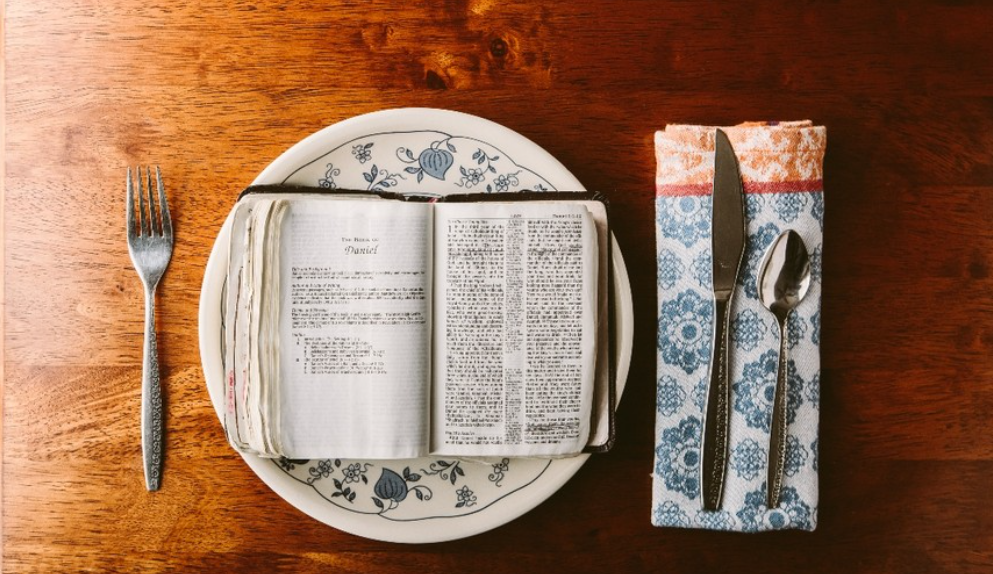
There are different kinds of fasts. You hear of the Esther fast, the Daniel fast, etc. Other modifications include whether it should be a dry fast or fasting from certain specific foods, etc. Fasting is a time when we give up something we love and are mostly committed to with our time and emotions (food, sleep, social media, etc.). It’s a time when we choose to stay away from these things and use that time to be in fellowship with God through prayer, worship, and reading the Word. It’s our investment in the spirit. We sacrifice something and petition for something.
Jesus told us that a time would come for us to fast. In Mathew 9:14-16, when Jesus was questioned about fasting, he stated that “a time would come when the bridegroom will be taken from them; then they will fast.” This was after John’s disciples asked why they fasted a lot, yet the disciples of Jesus didn’t. Fellow disciples, this is our time to fast.
In Mathew 17:14-21 KJV, when the disciples asked Jesus why they couldn’t cast demons out of the child, he said, “Howbeit this kind goeth not out but by prayer and fasting.” Important to note with verse 20 is that it brings out the element of faith. So our fasting is an act of faith for God to make the impossible happen. A deep vulnerability to God.
Isaiah 58 opens us to the understanding of fasting, and it says fasting is not in the way we dress or how “humble” we present ourselves physically, but it’s in the positioning of our hearts. Our desire to pursue the interests of the kingdom of God through fighting oppression and injustice, feeding the hungry, opening our homes to the homeless, clothing the poor, and helping our own relatives. And just like he is the fair God we know him to be, verse 8 then goes on to show us the different ways he will reward our fasting: with favor, healing, protection, his presence, his answers to all our prayers/needs, putting an end to the darkness around us, and making us fruitful in all seasons. And clearly stated in verse 12, the fruits of fasting do not only touch us. They also touch people in our households.
The 3-day Esther fast originates from the story of Esther and her uncle Mordecai. When the Jews were supposed to be killed because Mordecai refused to kneel and bow to Haman, Mordecai called on his niece, Queen Esther, who responded by saying in Esther 4:16, “Go, gather together all the Jews who are in Susa, and fast for me. Do not eat or drink for three days, night or day. I and my attendants will fast as you do. When this is done, I will go to the king, even though it is against the law. And if I perish, I perish.” Her going to the king without an appointment had consequences. But her faith and conviction in saving her tribe sent her into fasting. Fasting brings out our true desperate nature on the dependence on the power of God.
Proverbs 21:1 says, “In the Lord’s hand the king’s heart is a stream of water that he channels toward all who please him.” And truly, this is what we saw happen for Esther, Mordecai, and the rest of the Jews. The results of this fast were quite overwhelming and mind-blowing. In Esther chapter 6, we see that the king lost sleep as Mordecai (a jew) came to his mind. We see him revisiting old accounts, where he decided to reward Modecai for something he had that had been forgotten by the king. Interestingly, still, Haman, who had influenced the ruling over the killing of the Jews, ended up suffering the fate he had planned for the Jews. He was hanged together with his sons. Mordecai, the Jew, was made second in rank only to King Xerxes himself. He became a leader in a non-Jewish land, a land where Jews were supposed to be killed and wiped away. That is the power of fasting!
In the context of Proverbs 21:1, the king’s heart could be our spouses, our parents, our bosses, or anyone with a certain level of authority over us. When we fast and pray, kings change their minds to think in our favor. What was initially meant for evil is eventually turned around for our good.
Fasting teaches us about the nature of God. Once during an Esther fast, I had an overwhelming urge to give out money. I had carried a lot of cash in my wallet for days because I planned to do something with it, waiting for the right opportunity. Those three days, I felt overwhelming empathy and the desire to give this money to different people in need; this was mostly my patients during rounds or during a clinic day that I ran. It was so unusual, and so I prayed about it. That evening, I got a sermon on my YouTube timeline that explained exactly what I had gone through, highlighting how fasting makes us experience the true nature of God. Because it is in God’s nature to give, and it’s his nature to fulfill his promises to us.
Fasting makes us sensitive to the spirit in ways that we begin to discern the right direction we should take for whatever situations we may be in. It opens our spiritual eyes and ears. In being sensitive to the spirit, fasting enables us to kill our flesh and subdue it under the guidance of the Holy Spirit. Galatians 5:16 reminds us that if we live by the Spirit, we will not gratify the desires of the flesh. We will overcome temptation and sin in multiple ways this way.
And when we fast, we need to read the word of God. Psalm 119:105 says that the word of God is a lamp for our feet, a light on our path. The word goes before us; the word guides us. The word teaches us what we should know and how to go about different situations in life. And that way, we will not have our minds corrupted by the devil, nor will we conform to the standards of this world, which are influenced by the flesh.
I’m a firm believer that nothing is impossible for God. He holds all the power and has all the means to make anything and everything beyond our imagination happen. Our only limitation is the lack of faith. Fasting is an expression of faith.
Soon, I’ll share on Faith. Byeeeeeee.